

Winter Snow Load Risks and How to Prevent Costly Damage
Winter doesn’t just test operations, it quietly tests buildings too. Snow accumulation, ice buildup, and fluctuating temperatures can cause structural damage long before spring thaw reveals the evidence.
Understanding how heat loss affects roofs and attic spaces is critical. Natural Resources Canada provides a detailed overview of how insulation and ventilation impact winter performance:🔗Government of Canada
What Causes Winter “Window Leaks”?
When water appears above windows in winter, the window itself is rarely the root cause. In many cases, ice damming is responsible.
Here’s how it develops:
Warm air escaping into the attic melts snow on the roof
→ Meltwater refreezes along colder roof edges
→ Ice dams form and trap water behind them
→ Backed-up water enters the building envelope
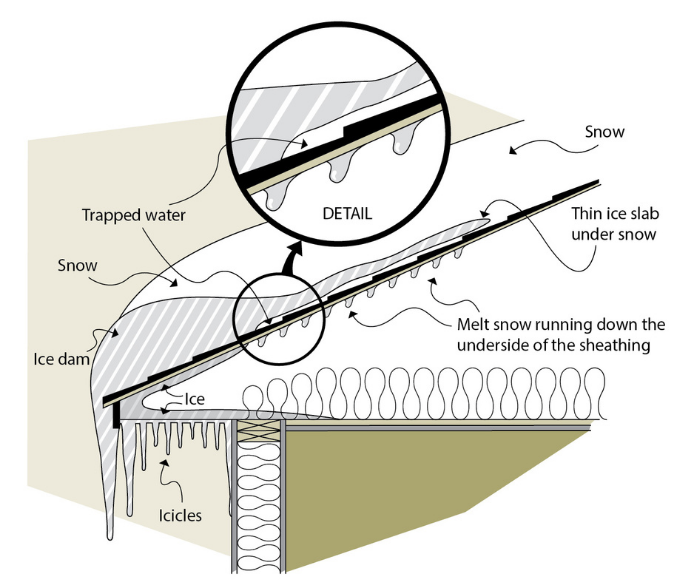
Freeze-thaw cycles intensify the issue, especially when temperatures fluctuate around freezing. Indoor humidity from kitchens and bathrooms can further increase condensation and ice buildup.
Risk Areas for Marinas, Showrooms, and Commercial Facilities
Winter damage often appears in unexpected places:
→ Insulated showrooms and office spaces can suffer interior drywall damage from roof leaks
→ Covered slips or storage structures, while less prone to ice damming, may be vulnerable to collapse under excessive snow load
Regular inspection and snow management reduce risk exposure.
Safe Ice Management
Improper removal methods can create additional damage:
→ Direct heat or flame can damage siding and roofing materials
→ Mechanical impact increases risk of structural harm and personal injury
If removal is necessary, consult trained professionals using appropriate equipment.
Preventative Measures Before Spring Thaw
→ Remove excessive snow accumulation when safe
→ Clear eavestroughs and drainage systems
→ Inspect attic insulation and ventilation
→ Check exterior seals around windows and doors
Winter damage builds gradually. Managing heat loss and snow load proactively can reduce costly repairs and operational disruption.
Disclaimer: This article is for general informational purposes only and does not constitute professional or technical advice. Building conditions vary. Consult qualified professionals for site-specific assessment and services.